
When a gaseous system is used, a pre-designated quantity of agent is discharged into an enclosure, this will displace the existing air and replace it with agent at a concentration that will extinguish a fire condition, knowing the concentration is essential to ensure safety factors are met and that adequate suppression occurs.
The problem here is that to contain the agent, the enclosure must be well sealed. This in turn prevents the displacement of air and will result in a build-up of excess pressure. Therefore, unless corrective action is taken, there is a strong possibility of structural damage occurring. In the worst cases this could also render the suppression system useless too.
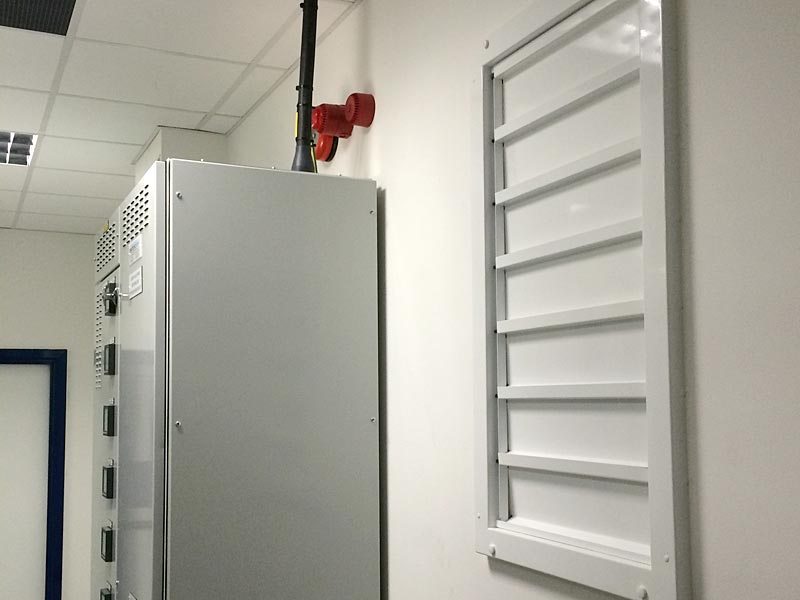
Pressure relief vents remain closed under normal circumstance, allowing no back-flow of air from outside the protected area. When the extinguishing agent is discharged the vent opens to relieve excess pressure, once this excess pressure has been released it closes again to maintain room integrity.
Pressure Test will install a pressure relief vent that is specifically designed to suit your system’s requirements. This will allow the system to function properly, aiding system dispersal whilst avoiding any adverse effect on the structural integrity of the enclosure.
Prior to any work commencing, an extensive evaluation of the enclosure will be conducted, a brief discussed with the client, and an in-depth plan is created based on the individual project.
Using the latest software we can ascertain the pressure relief requirements of your enclosure. Room integrity tests can be conducted to predict the peak pressure that is likely to be experienced at the time of agent discharge. Our engineers will establish whether the room has the sufficient strength to withstand the discharge pressure. If this is not the case, additional pressure relief venting is required. We can provide this and We can then test the function of existing pressure relief vents.
We offer our pressure relief testing service throughout the UK.
Call us on: 0118 973 7555 or